Book Specs 📖
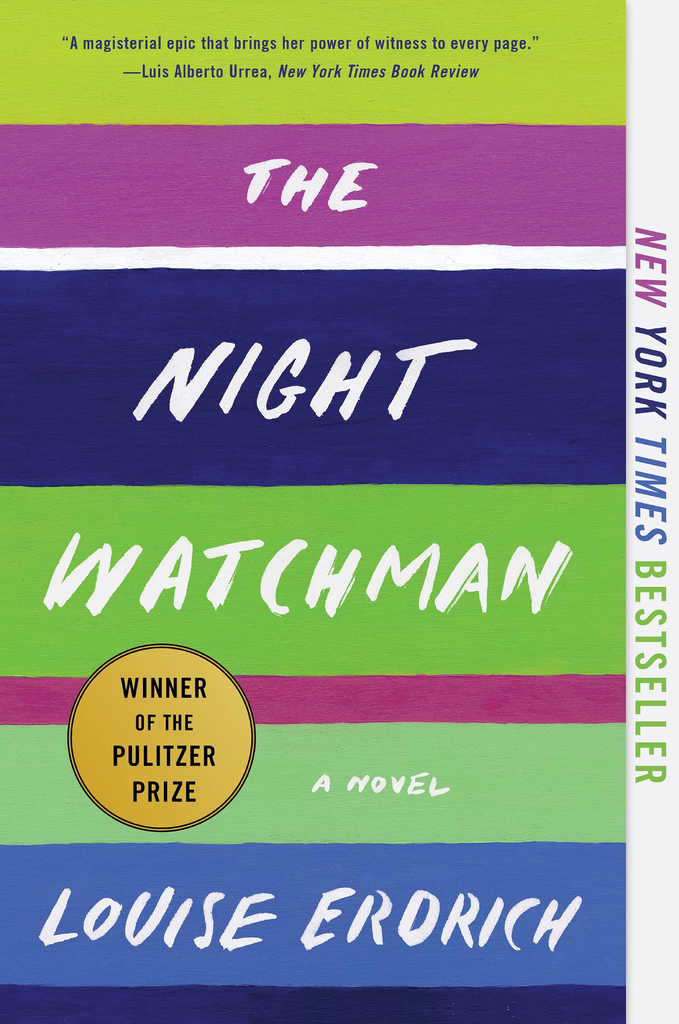
- Author: Louise Erdrich
- Genre: Historical fiction; Contemporary Native American
- Publisher: HarperCollins
- Pages: 451
One Sentence Synopsis🔖
Based on Erdrich’s grandfather’s struggle against Indian Termination Policy, follow the parallel stories of two employees at a jewel-bearing plant: a Chippewa council member seeking justice against the Policy and a young woman on a mission to find her sister.
Notes/Thoughts📝
- Sped read this one for work book club! Reminded me of how I used to read: for the goal of finishing the book vs. enjoying and understanding what I read. Definitely deserves a re-read to pick up on the layers of details (it ain’t Pulitzer Prize winning for no reason!) The writing course I took last year coincidentally centered around indigenous storytelling and how the multiple perspectives (passing a talking stick around the circle) is much more complex than western storytelling. I found an article on how we can integrate talking circles into our daily practices to inspire deep listening and multiple perspectives into the fabric of truth. Here it is: /https://media.vsb.bc.ca/docs/5ab48523-0819-43d0-b852-3e3478a36081_Set%202-1%20Talking%20Stick_1.pdf
- In the quest to find Vera, both Zhanaat (Patrice’s mom) and Patrice, have the same dream which gives Zhanaat certainty that her daughter is alive. Dreams in Western society are fluffy, hocus-pocus elements that have no place in our practical lives (You would never see dreams being admitted as evidence in court or used as criteria to make decisions in our Western culture). I see it as proof that our myopic view of looking at the world reduces our vision and understanding. Our subconscious, spiritual worlds are severely neglected and we all suffer more because we deny the power of our intuition. The one death we should be all afraid of is when we lose our imaginations. So yes maybe we are walking amongst zombies, but I digress.
- The significance of Pixie changing her name to Patrice reminds me of an article I read many years ago about job applicants with ethnic names anglicizing their names on resumes to sound more “white” to secure first interviews. To call someone by their name is intimate – especially in non-Western cultures where naming someone is akin to calling their fate. Pixie’s insistence on being name Patrice seems at first like an act of self-hatred. Towards the end, you understand that she uses her name as a subversive tool to infiltrate the oppressive systems that take from her and influence from the inside-out. Of course, with any assimilation into one system, there is a loss on the margins (of culture, of language, of other ways of thinking).
“Quotes”🗣
“You can never get enough of the ones you love.”
“How could Indians hold themselves apart, when the vanquishers sometimes held their arms out, to crush them to their hearts, with something like love?“
“Because everything was alive, responsive in its own way, capable of being hurt in its own way, capable of punishment in its own way, Zhaanat’s thinking was built on treating everything around her with great care.”
“When he needed to calm his mind, he opened a book. Any book. He had never failed to feel refreshed, even if the book was no good.”
“…you never really knew a man until you told him you didn’t love him. That’s when his true ugliness, submerged to charm you, might surface.”