Book Specs 📖
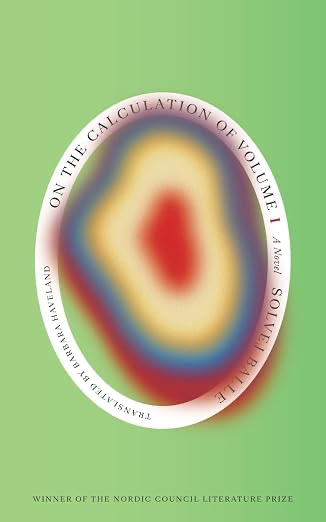
- Author: Solvej Balle
- Translator: Barbara J. Haveland (from the Danish)
- Genre: Speculative/literary/science Fiction
- Publisher: New Directions
- Pages: 160
One Sentence Synopsis🔖
An antiquarian bookseller finds herself on November 18th, ad infinitum.
Notes/Thoughts📝
- This is my second read of OCV, mainly for work book club. My ex kept the first copy I annotated (they always keep my favourites!!) so I read this again with fresh pages and the faint outline of the story, much like how the main character experiences the repetitions of November 18th. Isn’t that uncanny? You can never replicate the first time you experience something, but my second time was spent productively, making connections vs. reacting to the absurdity of the time loop. I will take advantage of some structured questions I provided to my colleagues, then swing for the fences with other observations/questions from my marginal annotations (WIP)
- The novel’s structure (diary entries) and the impact on the perception of time while reading. I noticed that the longer entries, especially in the beginning of the book made the days pass faster vs the shorter entries where the days felt faster. In the beginning entries, she reflects on what happened before and perhaps may be why the sentimental remembering, the grieving make our days feel the longest and heaviest. Labelling the entries by repetition # made me pay attention to the days while simultaneously disregard them. What’s the point of keeping track when it’s Groundhog Day?
- How do the subtle, physical deviations challenge/reshape our understanding of memory and material reality? The weight of physical proof vs. mental/spiritual etc is an important one for human beings. Anything that stays like the burn or the writing in Tara’s notebook is proof that her experiences are real, it is something that she can share with her husband to say “Look, I really am going through a time loop.” This might explain why humans compared to other species need to “leave their mark” and why there is an obsession with documenting our memories (i.e. photos, words, film etc.), to say our existence on this earth was not all for naught.
- Thoughts on loneliness and the evolution of Tara’s relationships throughout the book. Her loneliness comes in waves and is malleable, very relatable to how we experience our relationships with ourselves and others. Loneliness, a pitiable feeling, makes life seem destitute and pointless, you feel as though you are the only one experiencing this phenomenon. There is also the flip side of the same coin, being alone, or living in your solitude is a freedom that allows you to discover paths you never knew existed.
- How does the book explore emotional distance in relationships and the ways time shapes intimacy? I love her analogies on this topic because the distance she experiences were in constant flux. She reinterprets the “distance” with her husband as sounds, then music, morning fog, shipwrecked sailors, a weather system. And through each comparison she feels a different emotion and attachment. Relationships are exercises in creativity and it is up to us to adjust to new baselines in order to make something work or let it drift father away in the sea of distances we create. The book reflects this rhythm beautifully.
- Do you agree with the interpretation that the novel is ‘a mediation on climate change’? This one was difficult. I felt it was ecological but not necessarily about climate change especially when Tara compares herself to a “monster”, as someone that consumes and leaves the world more empty. Perhaps there is something deeper here, will need to look investigate.
- How does the book encourage introspection. Did it change the way you think about time, routine or presence? Absolutely. I’ve said this time and again. Time is a concept, more importantly it is a relational one, with ourselves and others. Our experiences depend on our mood and how we perceive our circumstances, the calendar days are a distraction. Something else: when we learn to appreciate the repetitions, we will notice variations/aberrations that we didn’t notice before. This is something I’m trying to work on: seeing the same thing with different eyes. Joy is never far away if you can appreciate the small details in moments. We’re all lil’ time magicians.
- Personal observations/questions:
- On mental illness: what is in your mind, what you experience spiritually, what does not leave a physical mark, is that any less significant? Why is it so difficult to believe in what we cannot see? Is empirical evidence any use in relationships?
- Humans are meaning making machines – relax, there’s no meaning to life, but I’m down to listen to a good story.
- On memory and happiness: is remembering all of our experiences the reason why we can’t be happy? Is that why dogs are so happy? What is a “morning fog” and what is self-deception? Does that take a certain number of repetitions to know, to escape?
- Do our relationships fall apart because we’ve made a decision and we continue to unravel as time moves forward or was the writing always on the wall and we just failed to notice it?
- The excitement for the 5th book’s release is palpable and can you guess when it is………..November 18th!!! Genius marketing!!!!
“”
It seems so odd to me now, how one can be so unsettled by the improbable. When we know that our entire existence is founded on freak occurrences and improbable coincidences.”
We have grown accustomed to living with that knowledge without feeling dizzy every morning, and instead of moving around warily and tentatively, in constant amazement, we behave as if nothing has happened, take the strangeness of it all for granted and get dizzy if life shows itself as it truly is: improbable, unpredictable, remarkable.
Maybe we are a weather system—condensation and evaporation: we are together, we look at one another, we touch one another, we condense, we come together, we make love, we fall asleep, we wake and revert to our strange bond, a quiet weather system with no natural disasters.
Because I’m trying to remember. Because the paper remembers. And there may be healing in sentences.
There is something reassuring about the sky…There is nothing to be done about it. It can be relied upon. It never changes. I cannot influence it and I cannot spoil it. It brooks no intrusion by me, it does not care about monsters…
Leave a Reply