Book Specs 📖
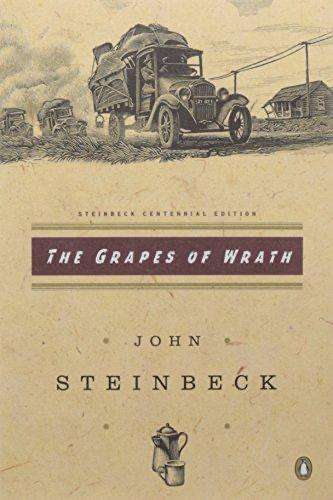
- Author: John Steinbeck
- Genre: Literary Fiction
- Publisher: The Viking Press
- Pages: 473
One Sentence Synopsis🔖
California dreamin’ turned farmer apocalypse.
Notes/Thoughts📝
- Third Steinbeck! Quite overwhelming to unload of the historical underpinnings of the Great Depression. Whenever I’m doing a first read, there’s always a degree of disorientation: what is happening to the characters, where they are, why? It’s one of the great tips on writing, to start in the middle and let the reader follow the journey. References to “dust”, “red earth”, “squatting men”, mass unemployment, Industrial Revolution (tractor vs. man) were giveaways
- Contrasted with East of Eden which still remains my favourite Steinbeck so far, I’ve noticed there is a quality to his writing that makes the characters not exactly realistic
- On modern relevance– Grapes of Wrath was published in 1939, before Steinbeck’s Magnus Opus, East of Eden. What boggles my mind is how much of what was experienced during the Great Depression, The immutability of stories to transcend time
- On strong female characters–When I hear literary criticism on Steinbeck’s characters being sexist/misogynistic, I wonder if we’re reading the same books or if there is a lack of reading deeply. People think, oh look, cruelty to a woman and immediately project their own biases on this character without looking at the context of the times. The truth can be nasty and I find that this discomfort for times passed has turned into a snobbish attitude of we are so much more evolved now. Is that not the same pretentiousness, the same “us” vs “them” mentality we apply to people in the same era as us i.e. immigrants, homeless people etc.
- The last scene with Rosasharn nursing the sick man (sorry, spoiler)?? What do I think this means? It could mean a return to humanity.Much of novel talks about property as a divisive obstacle to becoming a “we” and the bleakness of the landscape and
“”
“No man had touched the seed, or lusted for the growth. Men ate what they had not raised, had no connection with the bread. The land bore under iron, and under iron gradually died; for it was not loved or hated, it had no prayers or curses.
I got thinkin’ how we was holy when we was one thing, an’ mankin’ was holy when it was one thing…But when they’re all workin’ together, not one fella for another fella, but one fella kind of harnessed to the whole shebang–that’s right, that’s holy.
I’m glad of the holiness of breakfast. I’m glad there’s love here.
“How can we live without our lives? How will we know it’s us without our past?”
“Can you live without the willow tree? Well, no, you can’t. The willow tree is you.”
….that man who is more than his elements knows the land that is more than its analysis. But the machine man, driving a dead tractor on land he does not know and love, understands only chemistry; and he is contemptuous of the and and of himself. When the corrugated iron doors are shut, he goes home, and his home is not the land.
And this you can know–fear the time when Manself will not suffer and die for a concept, for this one quality is the foundation of Manself, and this one quality is man, distinctive in the universe.
“They’s a time of change, an’ when that comes, dyin’ is a piece of all dying’, and bearin’ is a piece of all bearing’, an’ bearin’ an’ dyin’ is two pieces of the same thing. An’ then things ain’t lonely any more. An’ then a hurt don’t hurt so bad, ’cause it ain’t a lonely hurt no more.…”
“There ain’t no sin and there ain’t no virtue. There’s just stuff people do.”
“It was her habit to build up laughter out of inadequate materials.”
Leave a Reply